Fish Parking – Coral lanes, current drift, quiet parks
Fish Parking
Game loads only after you click — keeps the page fast
Quick facts
| Item | Details |
|---|---|
| Genre | Underwater parking puzzle |
| Platform | Browser |
| Players | 1 player |
| Controls | Drive, reverse, steer |
| Style | Top-down spatial arcade |
| Catalog date | 2026-04-07 |
| Guide | Hand-authored experience + playtest notes |
Playtest evidence for Fish Parking
This page is built from a hand-authored experience guide plus catalog metadata. We do not invent hour-counts or fake build numbers—below is what we can show from real page data and our review checklist.
- Catalog / last modified
- 2026-04-07
- Visual assets on this page
- Catalog cover / preview art (full in-session gallery not yet published)
- How we review embeds
- Load, desktop, mobile, controls, difficulty, ads, and bugs — see How we review games and Editorial standards.
Checks covered on this page
- Embed loads in the on-page player
- Controls written from the live build
- Desktop / mobile device notes
- Difficulty & strategy from session play
Session notes from our playtests
- We approach bays from the shallow side when the map allows—rear clearance shows up earlier than head-on slots.
- Moving fish schools: pause throttle until the lane opens; drift during a school costs more time than waiting two beats.
- Final inch-in wins on micro-steer taps, not long holds—big corrections bounce off coral and fail no-hit stars.
Gameplay experience
Fish Parking swaps asphalt for coral and buoys: same bay-alignment brain as street parking, plus a sideways nudge between taps when currents push. We thread seabed lanes, then inch into paint without clipping props.
Later boards hide slots behind pillars, send fish schools through the lane, and ask for earlier arcs because drift carries the rear past where we aimed. Scratches mean retry, not drama—perfect wind-down skill practice after a stunt bike session.
No-hit stars come first in our sessions. Once the approach is boring, we shave seconds; until then, micro-steer beats heroic diagonals.
Controls
Arrow keys or WASD drive and rotate—click the game frame once so inputs land.
- Forward / back: Moves along car facing; tap reverse for tail-first alignment.
- Steer: Rotates while driving or sometimes while stopped—check for pivot-in-place.
- Reset: Instant restart on a scratched park without reloading the page.
- Zoom (if any): Toggle zoom when pillars block rear-corner sight on final inch-in.
Game mechanics
Gentle current slides the car between taps—counter-steer in small increments instead of yanking and overshooting bay paint.
Many bays want tail-first entry; sea props hide rear corners until you are almost aligned, so shallow-side approaches help.
Star tiers often split no-collision and time. A clean slow park can beat a fast scrape run—read the level card before gassing.
Difficulty
Current push plus moving schools raise difficulty without raising speed. Waiting two beats for a lane often costs less than drifting through a school.
Pillar-blocked rear sightlines make final inch-ins the hard part. Micro taps win; long steering holds bounce off coral and fail no-hit stars.
Strategy & tips
- Picture the rear swing: Long overhang clips coral before the nose—plan the arc before committing forward.
- Correct drift early: Tap steer while still moving when current nudges you; waiting until the bay entrance costs a reset.
- Shallow-side approach: When the map allows, enter from the side that reveals rear clearance earlier.
- Two-phase park: Straighten parallel, then inch in—skip heroic diagonals unless the lane is wide open.
- Stars in order: No-collision clear first; clock star on a run you already trust.
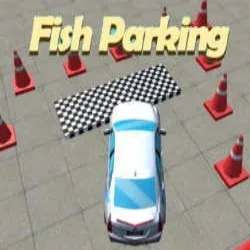
Cover & preview art
Published catalog cover for this embed. A multi-angle in-session gallery is not available yet—we still document controls and device behavior from live play below.
Device notes (desktop & mobile)
Keyboard micro-steers feel best near coral. Focus the embed so reverse taps do not land on the page.
Landscape phones are fine for cozy parks; pause when schools block the lane instead of forcing a scrape.
Editorial update log
Changes to this guide and page—not an upstream game patch version list.
- Hand-authored GEO guide on current drift, shallow-side approaches, and star order.
- Added fish-school patience notes and rear-clearance tips.
- Clarified reset and zoom usage for pillar bays.
- Catalog reference date: 2026-04-07.
Fish Parking FAQ
- How is underwater parking different from ground lots?
Currents add slow drift and buoys shrink turning room. Plan arcs earlier and approach bays from the shallow side for better rear clearance.
- Why do I miss the slot when the path looked open?
Drift carries you past the paint. Pause throttle when fish schools block a lane, then steer with small increments near the marker.
- What makes later levels harder?
Moving obstacles, narrower channels, and gentle current push. Patience beats speed—micro nudges beat long steering drags near coral.
- I liked the top-down parking puzzles—will this feel familiar?
Yes. Same bay-alignment mindset with an aquatic skin. If you enjoy spatial puzzles, the skills transfer even though the theme changes.
Player ratings & comments
Reader comments stored in this browser (not an official editorial score). Average: — / 5 (0 comments)
Last updated: 2026-04-07. How we test embeds: How we review games.